



Share This Article
Rami Al Ali Spring Summer 2027 Turns a Garden After Rain Into Fashion
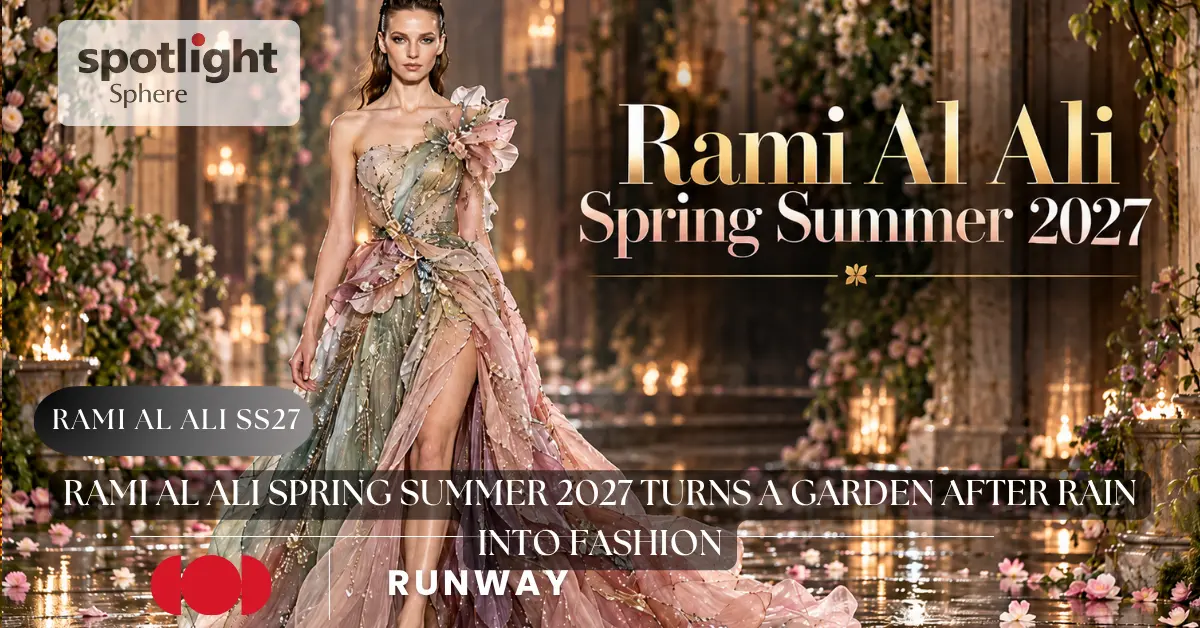
Rami Al Ali’s Spring Summer 2027 RTW collection “The Garden After Rain” takes its muse from the moments following a summer storm. Al Ali does not print floral patterns on fabrics. Rather, he interprets the effects of rain on various elements, from altering the weight and color of fabrics to modifying the movement and reflection of light and so on. Consequently, the designer uses scattered embroideries and a color palette of shades of blues, greens, purples, and neutrals.
There are vibrant shades of colors found in wet stones and other surfaces in a garden following a summer rain. Rami Al Ali’s Spring Summer 2027 collection takes its muse from such a moment.
Of course, many expect that a collection taking its muse from such a moment will incorporate lots of floral prints. Rami Al Ali, however, focuses on other elements of a summer rain and how they can be incorporated into the designs of a garment.
Although the designer is based in Dubai, Rami Al Ali is of Syrian origins. His practice adds to the existing studies of the language of design from Dubai and the role it has played in the international careers of several designers based in the city.
Key Takeaways
The design of the collection was inspired by the aftermath of a rain shower rather than by actual flowers.
There is a contrast of light, lacy layers that suggest the lightness of mist and the heaviness of moisture in the fabric that suggests rain.
Rather than focusing on embroidery that embraces classical and symmetrical patterns of flower designs, Al Ali focuses on randomness of design, much like the randomness of designs of a raindrop or of falling petals.
The colors allude to Al Ali’s use of an array of saturated hues of green and blue as well as the paler tones of ivory and pink.
The Garden After Rain Is About Change, Not Flowers
There are a number of collections that involve the classical elements of design. For example, Winds of Nature by Ralph & Russo focused heavily on animal elements. In contrast, Rami Al Ali’s latest collection is much more interpretive; he didn’t simply interpret the signs of nature in the design of a petal or a leaf. In this collection, Al Ali wanted his consumers to experience the ephemeral quality of rain rather than the other elements of nature. Through the collection, consumers are allowed to see that nature is in a constant state of change, much like the endless ripples caused by a rain shower.
Fluid Fabrics Capture the Weight of Rain
Choosing the right fabric to construct a design plays an important role in telling the story of this collection. Fabrics that have an ability to move with the body and create a flowing line give the illusion of heavy wet fabric. Other fabrics suggest the weight of water vapor that is lifted by the breeze and dispersed over a garden.
The design’s ever-changing silhouette amplifies the contrast of the stiffness of a structured bodice with a soft, flowing skirt. A bride’s gown that is constructed in such a way that it appears heavy and sculptural while a model stands still may, in reality, look entirely different when in motion.
Embroidery Looks Scattered Rather Than Perfect
The use of a more carefree style of embellishment to give the effect of laissez-faire and nonchalance is more commonplace in the Western world. However, in the East, symmetry plays a more dominant role in embellishment. Rami Al Ali seems to be altering this idea.
In SS27, the placement of embellishments around a design plays a role in giving the appearance of randomly scattered rain or snow. Nothing about the placement feels premeditated or forced.
This collection uses a smattering of soft pastel colors. Many of the embroidered designs could easily appear to be pressed flowers or imprinted with delicate molds rather than stiff or contrived embroidery. Imperfection feels intentional to demonstrate nature’s chaos as it complements the notion that people often attempt to catalogue the laws of nature, when in fact nature often does not abide by human constructs.
The Colour Palette Moves Like a Clearing Storm
Color creates a sense of narrative in Rami Al Ali’s SS27 collection. Color moves through Al Ali’s collection in a particular order to symbolize the process of a storm passing and a Garden blooming.
To represent the calmness after the rain, the color palette starts with chalk and shades of ivory. Next, Al Ali represents deep purples and rich pinks of blooming flowers. Following that, the palette represents plants and foliage with a deep forest green. The collection comes to a conclusion and represents the calmness of the sky after the passing of the storm with a soft and serene blue. Al Ali includes subtle metallics to provide a depiction of fleeting rays of light bouncing off wet surfaces.
Al Ali connects the colors of the palette to represent the various stages of a blooming garden. Viewing the collection from start to finish is essential to understanding Al Ali’s narrative.
Softness and Structure Define the Silhouettes
In combining a robust and dramatic use of structure and sculptural techniques, and the deployment of textiles in fluid and graceful movement, Ali brings a contemporary and wearable take on his highly established aesthetic.
This collection is often praised for its elegance and femininity, but that isn’t what draws the eye in these pieces. Several silhouettes, for example, are constructed to maintain a defined shape at the shoulder or waist, with the rest of the piece flowing freely. Defining a shape and creating movement in a garment requires an advanced understanding of tailoring. Though most of his pieces are ready-to-wear, Al Ali has exhibited his mastery of tailoring in the field of eveningwear as well, which explains his international acclaim.
Why Rami Al Ali’s Dubai Connection Matters
Although there seems to be public confusion on this point, Rami Al Ali is from Syria. He resides and works in Dubai, and therefore he is considered a Dubai-based designer.
Rami Al Ali’s Place in Dubai’s Designer Scene
Given that he works within the confines of the international design and tailoring field, Al Ali sheds light on Dubai’s recent role in the design world. As Al Ali illustrates, Dubai is beginning to function as the base for designers who want to operate between the Middle Eastern market and the international design field. Along with other design emigrés who base themselves in the city, he helps to support and give recognition to Emirati designers.
Why the Collection Works Beyond the Runway
Al Ali does an excellent job expressing the culture of his clientele in his ready-to-wear collections, but does his work cross over into areas where it is practical and wearable? Many of the statements made by his pieces beg this question.
Fluid dresses and dresses adorned with embroidery in this collection seamlessly integrate design elements offered by evening dresses already part of the luxury vacation wardrobe of shoppers from the Gulf. These designs pay special attention to formal events, including dinners and festivals, and outings worn by women of the Gulf.
On the other hand, this may not indicate that any of the pieces will be instant hits, like the sell-out pieces of previous years. However, what is important to note is that the designs incorporate elements offered by the occasion dresses that already enjoy a market and are available at different boutiques across the resort cities of the Gulf, including Dubai.
Nature Is Becoming a Language, Not Just a Print
Rami Al Ali, Spring Summer 2027, uses design elements offered by nature and other surroundings in a different way from other design elements incorporated by other fashion designers. In this collection, Al Ali expresses different emotions and feelings in a different way from how other designers do. Al Ali uses designs inspired by nature more abstractly.
In the Garden After Rain collection, Al Ali uses imagery of a Post-Thunderstorm Garden, in a more abstract way, to symbolize different moods, as opposed to actually printing or figuratively using a design element of Post-Thunderstorm Garden on fabrics. Al Ali does not use design elements offered by nature in a conventional or literal way, like other designers do, to express various moods, feelings, and other emotions.
Conclusion
Rami Al Ali is a designer who plays with unexpected interpretations of themes. In Rami Al Ali Spring Summer 2027, instead of creating a stereotypical easy-breezy-barely-there-dresses collection about summer, Rami Al Ali took a more conceptual approach to a collection inspired by nature. Rain, in his case, helps explain fabric weight, positioning of embellishments and colors, and the overall motion of a piece.
The Garden After the Rain shows, without the use of a single flower, how Rami Al Ali interprets ready-to-wear. Those in the industry know how impressive it is for designers to gain such prominence in the international scene. Not only is this collection worth studying for those interested in the work of Rami Al Ali, but also for individuals interested in the work of designers based in Dubai.
FAQs
What is The Garden After Rain Collection?
The Garden After Rain is the title of Rami Al Ali’s Spring Summer 2027 ready-to-wear collection. It is shown during his schedule of runway presentations for the year.
What Colours Appear in Rami Al Ali SS27?
The collection moves from light hues of ivory to dark purple, to shades of green, to a soft sky blue. Metallics are seen throughout to represent water.
Is Rami Al Ali Based in Dubai?
Although Rami Al Ali is from Syria, his atelier is in Dubai, and his fashion house was established in Dubai; therefore, he is considered a Dubai-based designer.
What Makes the SS27 Collection Different?
Rami Al Ali’s SS27 collection is focused on the theme of a storm. Unlike other floral collections, Rami Al Ali does not use any symmetrical patterns or floral prints. The embroidery hints at mist, the fabrics evoke dampness, and the colors used are purple, green, and blue, representing the ending of a storm.
