



Share This Article
Azra Khamissa: Modernizing the Ancient Art of Henna
Most people think of henna as something that happens at weddings. You sit down, a design goes on your hand, it fades in two weeks and that is the end of it. Azra Khamissa has spent years proving that thinking is too small.
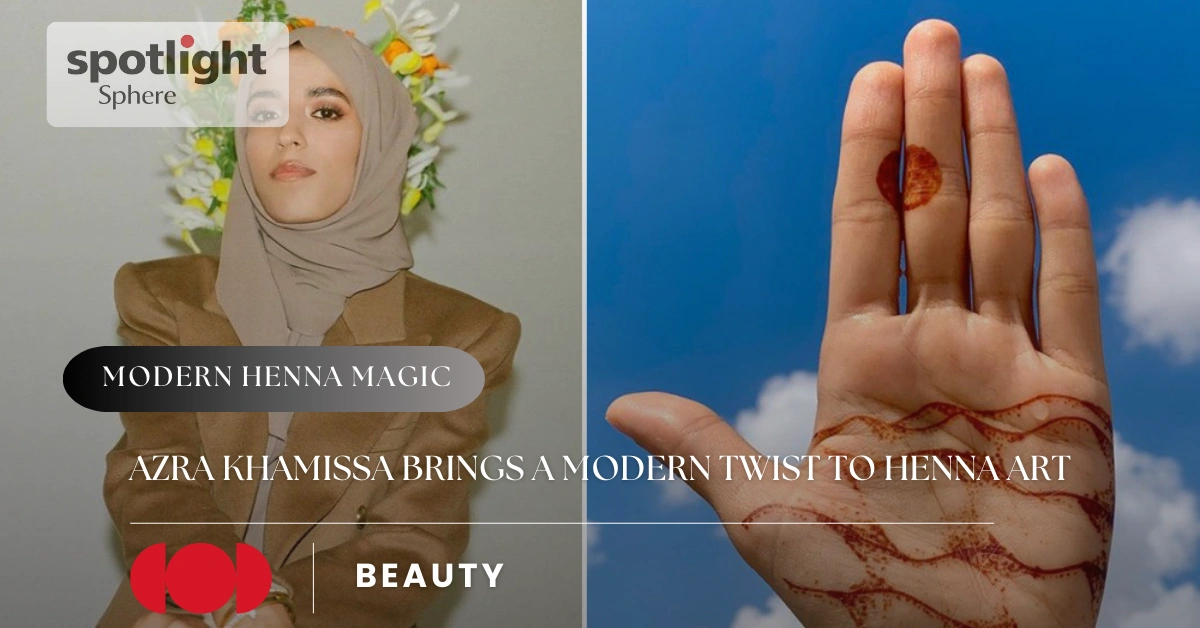
She is one of the UAE’s leading henna artists and the way she approaches the craft has very little to do with the standard bridal booth experience. What she does is closer to portraiture. Every design she creates is specific to the person sitting in front of her. Not their outfit. Not the occasion. The actual person.
How It Started
Khamissa did not launch a brand or build a strategy. She just started showing up to events with a henna cone and offering to do designs for people who were interested.
The first significant one she remembers was a simple moon on her friend Mashael’s hand. Small. Quiet. Nothing that would make anyone stop and stare from across the room. But it said something and it was that early instinct, that reach for the meaningful over the decorative, that became the foundation of everything she does now.
She has never really moved away from that approach. The designs got more refined. The techniques got more considered. The instinct stayed exactly the same.
She Starts With the Person, Not the Design
Before Khamissa puts anything on a hand she asks a question. What do you love.
Not what do you want the henna to look like. Not what have you seen on social media. What do you actually love. The answers become the design. Someone mentions a flower they grew up with, it finds its way into the pattern. Someone describes a place that matters to them, the shapes from that place appear on their skin.
The result is henna that lasts two weeks on the surface but carries something that stays longer. That connection between the person wearing it and the person who made it is the whole point for Khamissa. The visual outcome is almost secondary.
Henna as Something Closer to Meditation
Khamissa describes the experience of applying henna using sound. Rustling grass. Ocean waves. The kind of steady rhythmic noise that slows everything down and makes space for focus.
That comparison is not accidental. Her process genuinely requires that kind of stillness. She often works late at night, studying references, floral shapes mostly, before she starts translating them into designs. The work demands calm and she builds the conditions for it deliberately.
This meditative quality runs through the designs themselves. Peace, kindness, empathy. These are not words she uses for marketing. They are the values she is actively trying to put into work that disappears in a fortnight. The fact that henna is temporary is part of what makes it meaningful to her rather than a limitation she works around.
The Technical Side That Most People Never See
Khamissa honours the traditions behind henna while also knowing exactly what she is doing technically.
She uses steaming to intensify the colour after application. She references Indian techniques including a lemon and sugar fixative that helps the design last longer on the skin. These are not shortcuts or modern substitutes. They are methods that have been refined over generations and she uses them because they work.
Her background adds another layer that most henna artists simply do not have. She trained as a chiropractic doctor. She previously worked in photography and ran a handbag brand. That combination sounds unlikely but it produced an artist who thinks about hands differently. The joints, the bones, the way a hand moves when it opens and closes. Her designs account for all of that, which is why they look dimensional and alive rather than flat against the skin.
Henna Belongs to Everyone
One thing Khamissa is clear about is that henna is not exclusive property. Not of any single culture, not of any particular occasion, not of people who already know what they want before they sit down.
She actively encourages people who have never tried it to start with something small. A few dots. A single small motif. Just pick up a cone and have fun with it. That is her actual advice and it reflects something genuine about how she sees the craft. Henna crosses cultures, crosses generations, crosses the gap between people who have been doing it their whole lives and people doing it for the first time.
She has noticed a growing interest in simpler more contemporary designs, minimalism influenced by 1960s and 1970s aesthetics. That shift does not bother her. She sees it as henna finding new audiences rather than losing its identity.
What She Is Building Beyond the Designs
Khamissa wants natural preservative free henna in mainstream beauty stores. Sephora is the example she points to. The shelf life challenge is real because henna without preservatives does not last long enough for standard retail. But she believes it is a problem worth solving and she is pushing toward it.
The bigger project running alongside her henna work is Talli Circle. Inspired by Emirati braiding techniques, it is a community space where women gather to learn traditional arts, slow down and connect with each other through craft. The goal is to take regional traditions and share them with a global audience in a way that feels respectful and genuine rather than packaged for tourism.
Talli Circle is a long game. Khamissa is clearly thinking past the individual design on the individual hand toward something that outlasts any single piece of work she will ever create.
FAQs (Frequently Asked Questions)
Who is Azra Khamissa?
One of the UAE’s leading henna artists. She is known for a personal, meaningful approach to design that starts with understanding the individual rather than applying a standard pattern.
What makes her style different from traditional henna?
She creates designs based on what each person loves rather than using preset patterns. The result is henna that feels personal and specific rather than decorative.
How does her medical background influence her work?
Her training as a chiropractic doctor means she thinks about the structure of hands when she designs. Joints, bones and movement all inform where and how she places elements, which is why her work looks dimensional rather than flat.
What techniques does she use?
Steaming to intensify colour after application and a lemon and sugar fixative referenced from Indian henna traditions to improve longevity on the skin.
Does she only do henna for special occasions?
No. She believes henna is for everyone and every occasion. She encourages complete beginners to start with something small and just enjoy the process.
What is Talli Circle?
A community project Khamissa created inspired by Emirati braiding techniques. It brings women together to learn traditional crafts, slow down and connect. The aim is to share regional arts with a wider global audience.
Can beginners try henna at home?
Yes. Khamissa’s advice is to start simple. A few dots or a small motif is enough to begin. The point is to enjoy it rather than get it perfect immediately.
What is her goal for henna accessibility?
She wants natural preservative free henna available in mainstream beauty stores. The shelf life of natural henna is the main challenge but she sees it as a problem worth solving rather than an obstacle.
