



Share This Article
How Second-Hand Shopping Became Cool in the UAE
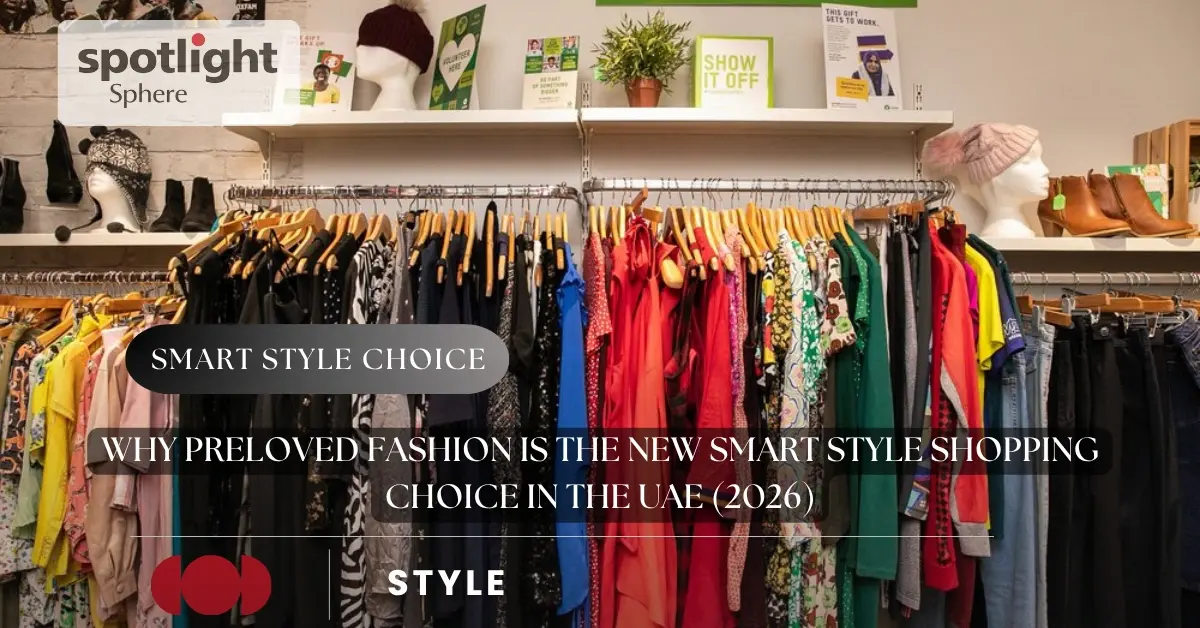
There’s a silent revolution underway in the UAE fashion landscape. Consumers in Dubai and Abu Dhabi are now looking beyond their usual shopping baskets for that pristine, first-time wear and are embracing the second-hand world, with an added air of cool and an agenda all their own. The idea, which carried a tinge of an almost awkward shame not too long ago, now looks like a smart move that the chic community in the city and the capital are happy to own.
The Secondhand Market Has Gone Mainstream in the UAE
Not long ago shopping for pre-loved clothes was considered a niche habit reserved for a small group of budget-conscious buyers. Today that picture has completely changed. Rachel O’Hara, founder of Showcase DXB which is a rent-a-booth concept popular among some of Dubai’s best-dressed residents has noticed a clear shift in how people shop. Buyers are now placing greater importance on quality longevity and genuine value rather than simply choosing something new off the shelf.
That kind of consciousness is beginning to shift the whole country’s retail picture in a number of unpredictable, profound ways.
How Dubai’s Fast Lifestyle Created a Goldmine for Secondhand Shoppers
Dubai’s culture of frequent shopping and wardrobe updates has become a surprising benefit for secondhand shoppers. Canadian content creator Randi Comrie has spent the past year documenting the UAE’s pre-loved shopping scene for her social media audience. She points out that because residents cycle through their wardrobes so quickly the secondhand stock available in the city is often in remarkable condition.
Many secondhand items are in near-new condition, with some showing little to no signs of wear. In many cases, shoppers can even find clothing with the original price tags still attached. For anyone hunting for quality pieces at better prices Dubai has quietly become one of the best cities in the world to explore secondhand fashion.
Sustainability Is Pushing More Shoppers Toward Pre-Loved Clothing
Beyond style and savings there is a growing environmental awareness driving people toward secondhand fashion. The global clothing industry contributes roughly 10 percent of worldwide carbon emissions, making it one of the most environmentally impactful sectors. Chemical dyes and synthetic fabrics have contributed significantly to environmental damage while fast fashion has flooded the market with cheaper and cheaper options over the past decade.
The UAE produces around 220000 tonnes of textile waste every single year.But, to fight back, the government has created the Naseej – an acronym for the National Initiative for Textile Circularity. The goal of the new program? To deal with piles of clothes headed to landfill and move towards a more circular model of how the nation dresses. For the average consumer, embracing all things second-hand is one of the most immediate ways to get involved in the movement.
From Small Shops to a Thriving Scene Across the Emirates
The secondhand shopping infrastructure in the UAE has grown considerably. Showcase DXB is one of dozens of shops operating across the country. Thrift for Good, which is one of Dubai’s most established donation-based stores, has doubled its number of locations to four in the past year alone as it works to keep up with rising supply. Even Ras Al Khaimah has recently welcomed its first secondhand shop called Chic Resale showing that this movement is spreading well beyond Dubai.
Online the picture is equally exciting. Platforms like Taggy and Yalla BB are growing fast and new apps continue to launch inspired by the success of popular resale platforms in the UK. Weekend pop-up markets dedicated to pre-loved fashion have also become a regular fixture in both Dubai and Abu Dhabi with Comrie tracking between four and six such events on any given Saturday or Sunday.
Luxury Resale Is Rewriting the Rules of High-End Shopping
The secondhand movement in the UAE is not limited to everyday clothing. The luxury resale market is evolving rapidly and the motivations of buyers have shifted in meaningful ways. Safiya Mehbaliyeva, founder and chief executive of Gemaee, a luxury resale platform inspired by Japan’s detail-oriented approach to quality, says the conversation has evolved far beyond affordability.
Where people once turned to pre-loved luxury mainly to save money they are now seeking something different entirely. Individuality sustainability and making smarter decisions have now become the buzzword. In Dubai, combining high-fashion brands with unique second hand pieces has suddenly become fashionable, and consumers have become increasingly inquisitive. They want to know the rarity, origin, craftsmanship, condition, resale value and whether the goods were acquired responsibly and authenticated.
Mehbaliyeva describes today’s customers as significantly more educated and intentional. Sophisticated buyers no longer see pre-loved luxury as a lesser choice. Many shoppers prefer pre-owned pieces because they can discover discontinued collections and exceptional vintage craftsmanship that modern retail stores no longer carry.
Changing Perceptions and the Road Still Ahead
Even so, some more work needs to be put in as it still remains the case that some people’s views change concerning thrifting. “I guess one of the things that still stands as the biggest battle for us is customers seeing beyond certain preconceptions”, O’Hara says. “We want people to see the incredible quality and uniqueness available to them already.”
Comrie agrees and puts it simply. Secondhand shopping allows people to be creative and expressive and to find pieces that nobody else has without feeling guilty about the environmental cost. At a very human level she adds that while people cannot control much in the world right now they can walk away from a thrift shop feeling genuinely happy about what they found.
The broader market has also had to navigate some difficulty. O’Hara acknowledges that recent regional uncertainty created a challenging period for many businesses. Her response was to focus on community strengthening digital engagement and remain flexible enough to adapt as consumer behavior shifted. With the market picking up again from May 2026 business owners across the secondhand space are looking ahead with real optimism.
True Vintage Remains a Gap Worth Watching
One area where the UAE still has room to grow is in genuine vintage clothing. Pieces from decades past that carry real history and craftsmanship are still rare in the local market. As a relatively young country the UAE does not yet have the deep reserves of aged clothing that fill the famous markets of Amsterdam or other European cities.
Some shops such as Fashion Rerun and Digg It in Al Quoz and Vintage Vibe in Oud Metha are beginning to cater to those looking for retro and Y2K styles. But Comrie is clear that finding something from the 1940s or 1950s remains unlikely. She frames it not as a criticism but as a geographical and historical reality that time will slowly begin to address as the country matures.
Trust and Transparency Are Becoming the Foundation of the Industry
Given the growth of the secondhand and resale market in the UAE, Mehbaliyeva feels that the future winners of this sector are businesses which hold customer trust at their core. For example, authentication standards, accurate item condition disclosures, and consistent delivery of strong customer experiences and good long term brand reputation, will prove to be more significant than volume and price.
She puts it clearly. Trust is becoming the currency of this industry. Her vision for the UAE is to see it grow into one of the global leaders in luxury circular fashion and not just commercially but culturally as well. That means encouraging people to buy more thoughtfully, hold onto their pieces longer and stop thinking of pre-loved as anything less than the real thing.
Why Secondhand Shopping in Dubai Just Makes Sense
Comrie wraps up the conversation with a perspective that feels genuinely optimistic. Secondhand shopping in Dubai simply makes sense because the city has always had high turnover and a flash culture that moves quickly. But that same energy creates opportunity. The clothing that passes through this city at speed can find a second life with someone who will truly appreciate it.
Her message to residents is straightforward. If a piece of clothing no longer fits your life, pass it on to someone who will love it. And if you have never explored Dubai’s secondhand scene the community is growing and there is room for everyone in it regardless of style, budget or whether you are there to buy or sell.
Explore more sustainable fashion and smart shopping stories at Spotlight Sphere.
